



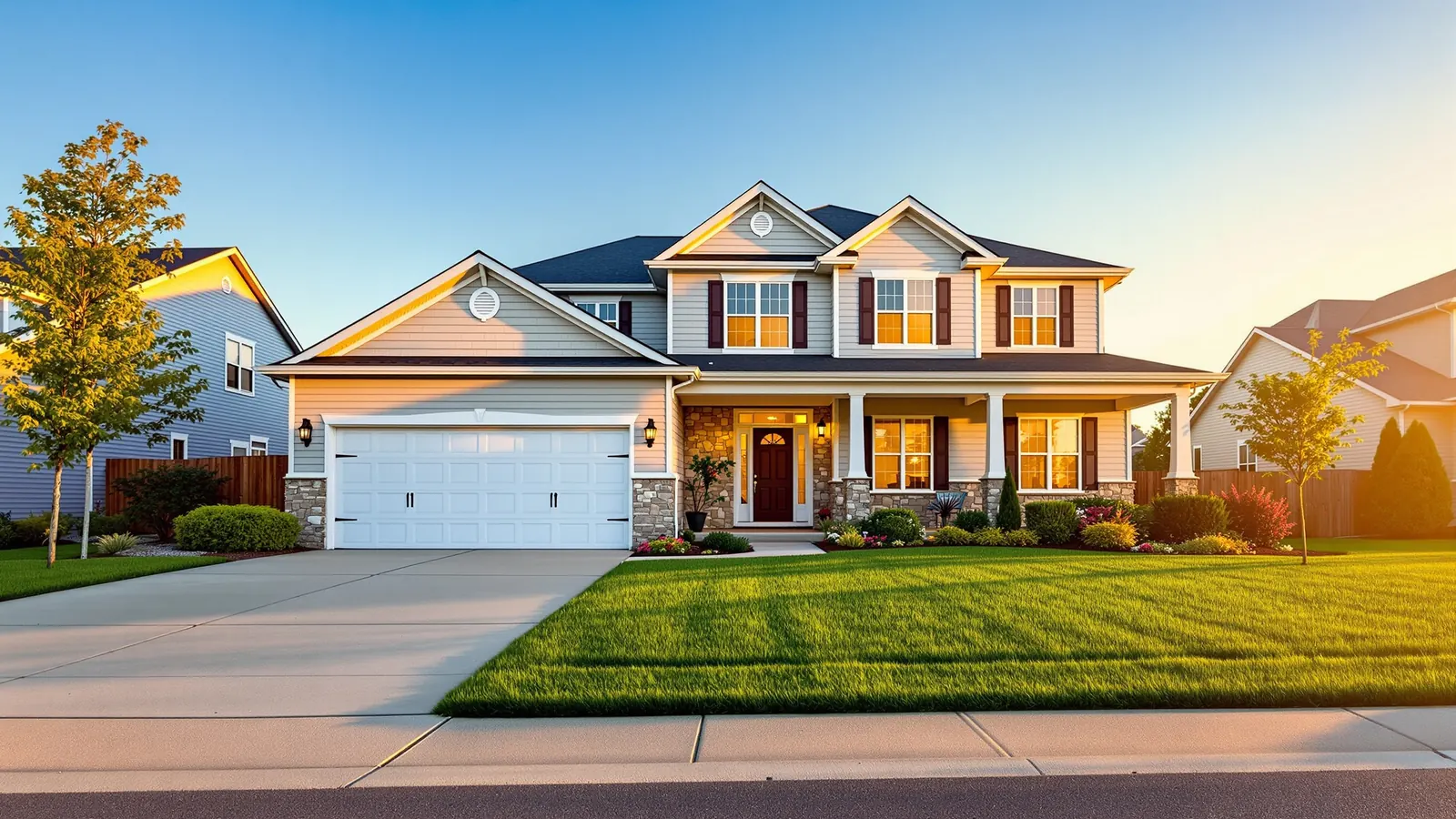
Every other photo in a listing is optional. A buyer can skip the second bedroom, ignore the utility room, and never scroll as far as the garden. Nobody skips the first one, because the first one is the thumbnail: it’s what appears in the portal grid, in the saved-search email, in the text message an agent sends a client. And on almost every listing, that thumbnail is the outside of the house.
Which makes curb appeal a strange item on the pre-listing checklist. It’s the thing agents most reliably tell sellers to fix, the thing sellers most reliably underestimate, and the thing that most often gets undone by a grey Tuesday morning on photo day.
Agents agree on this more than they agree on anything
The most useful data here comes from the National Association of Realtors and the National Association of Landscape Professionals, who survey their members jointly on outdoor projects. In the 2023 Remodeling Impact Report: Outdoor Features (the most recent edition), the curb-appeal numbers are close to unanimous:
- 92% of Realtors have suggested sellers improve their curb appeal before listing a home for sale.
- 97% of NAR members believe curb appeal is important in attracting a buyer: 75% “very important,” 22% “somewhat important.”
- 98% believe curb appeal is important to a potential buyer, with 63% calling it very important.
Be clear about what that is and isn’t. These are practitioner opinions collected from a survey, not an econometric study of sale prices. NAR emailed the survey to a random sample of 42,164 members in January 2023 and got 1,891 responses back. What it establishes is professional consensus, which is worth something on its own: 92% agreement among people who watch buyers react to houses for a living is a strong signal, even if it isn’t a coefficient.
The money isn’t where people think it is
The more interesting half of the same report is the cost-recovery table, because it inverts the intuition. Realtors were asked what share of a project’s cost a seller would recover at sale. The cheapest, least glamorous work wins by a mile:
| Outdoor project | Typical cost | Estimated value recovered | Cost recovery |
|---|---|---|---|
| Standard lawn care service | $415 | $900 | 217% |
| Landscape maintenance | $4,800 | $5,000 | 104% |
| Overall landscape upgrade | $9,000 | $9,000 | 100% |
| Tree care | $2,875 | $2,500 | 87% |
| Landscape lighting | $6,800 | $4,000 | 59% |
| Fire feature | $9,000 | $5,000 | 56% |
| In-ground pool addition | $90,000 | $50,000 | 56% |
A $415 lawn service is estimated to return $900. A $90,000 pool is estimated to return $50,000, a $40,000 donation to the next owner. The pattern holds all the way down the list: mowing, weeding, edging and pruning return more than they cost, and everything you’d call a build returns less.
The same inversion shows up in what agents actually recommend before a sale. Landscape maintenance was recommended by 74% of Realtors and standard lawn care by 53%; an outdoor kitchen, by 1%.
Two caveats worth stating, since the numbers are seductive. These are Realtor estimates against a standardised hypothetical (the report assumes a 2,500-square-foot house on a 14,000-square-foot lot), not measured outcomes from paired sales. And a 217% recovery on lawn care partly reflects how little lawn care costs; a large percentage of a small number is still a small number. What the table reliably tells you is the ranking, and the ranking is unambiguous.
Then photo day happens
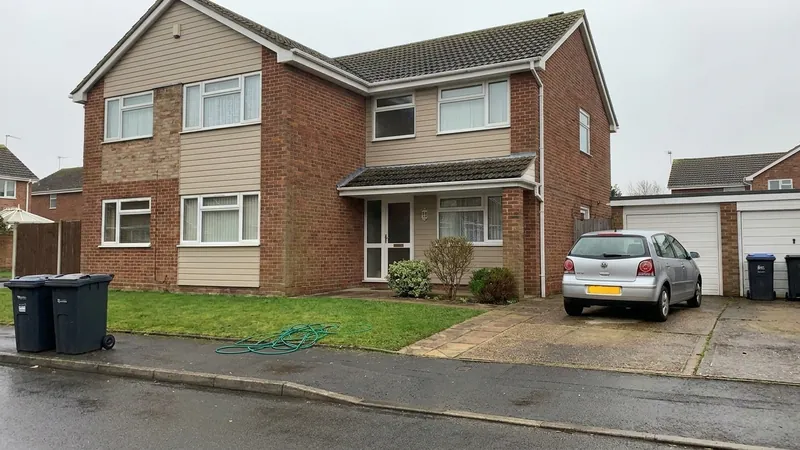
Here’s the failure mode nobody plans for. You do the work: the lawn is cut, the beds are weeded, the drive is swept. Then the photographer comes on the one morning they had free, and:
- The sky is a flat white sheet, so the house reads grey and the whole shot looks like a cold day in February.
- It’s collection day, so there are two wheelie bins at the kerb.
- The neighbour’s van is parked across the front of the property.
- It rained an hour ago, so the driveway is dark and blotchy and the light is dead.
None of that is the house. All of it is in the photograph. And the photograph is what goes out.
The cost of fixing it the traditional way is not just a second photographer’s fee. It’s the delay, and the delay is the expensive part. A listing gets pushed out to saved searches and portal alerts once, when it goes live. Re-shooting in week three doesn’t re-trigger that; it just means everyone who already looked saw the worse version. We made this argument in more detail in The Fall Market Is the Hard One, and it applies year-round: the debut is the asset.
What you can honestly fix in the photo
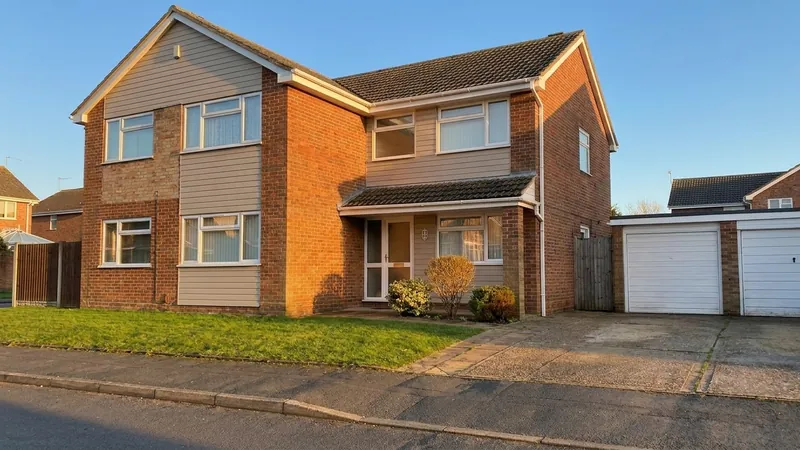
This is the gap the Exterior Studio is built for. You upload the exterior shot you already have and change the conditions of the day it was taken, not the property.
- Time of day. Mid-morning, bright midday, golden hour or dusk, with shadows and window light that agree with the sun you picked.
- Sky. Clear blue, light clouds, or something more dramatic, matched to the light already on the building, with clean edges along the roofline.
- Removals. Cars, bins and clutter, people, snow, rain and puddles. The surface underneath each one gets rebuilt to match what’s around it.
- A free-text box for the one-off (“keep the flag on the porch”).
Everything is off by default and opt-in, which matters more than it sounds. If all you want is the bins gone, you get the bins gone, and the tool doesn’t quietly relight the scene or swap the sky because it thought that would look nicer. You publish the photo you asked for.
And what it refuses to touch
The constraint is the feature, so it’s worth being explicit about it. A buyer is going to stand at that kerb. The rule the tool enforces is that the edit may change the photograph, but it must never change the property.
In practice, that means it will not:
- Re-landscape. No greening up a brown lawn, no mowing it in software, no replanting beds or filling bare patches.
- Erase infrastructure. Power lines, poles, utility boxes, satellite dishes, aerials and street signs stay.
- Resurface anything. Driveways, paths, roofing, brickwork and render keep their existing stains, moss, cracks and wear.
- Repaint. Siding, cladding and trim colours are preserved unless you explicitly ask.
The clearest illustration is snow. Clearing snow from a listing photo is allowed, because snow is weather, not property, but the rule attached to it is keep the season: this is the same day with the snow cleared, not a summer photograph. Bare trees stay bare, dormant grass stays dormant. You get an honest February photo without the drifts, rather than a July fantasy.
The line, if you want one sentence for it: you may remove what was in the photograph that day, and you may not change what is bolted to the property. A van, a bin, a hose and a rain shower will all be gone by the time a buyer arrives. A power line and a cracked driveway will not.
Why the line sits exactly there
It isn’t squeamishness. Sky replacement and time-of-day relighting are treated across the industry as routine photo enhancement. Re-turfing a lawn or erasing power lines is a different thing entirely: it misrepresents the property a buyer is being sold, and under NAR’s Code of Ethics (Article 12, on truthfulness in advertising) it’s the listing agent, not the software vendor, who answers for it.
The same logic governs interior virtual staging, where the rule is change the furniture, never the structure. If you want the fuller version, including sample disclosure wording, we covered it in Is Virtual Staging Allowed on the MLS? The short answer: disclose it, and stay on the right side of the line so there’s nothing awkward to disclose.
A curb-appeal checklist for shoot day
Do the physical work first. The tool is for what’s left over, not a substitute for a mower.
- Mow, edge and weed. The highest-return item on NAR’s whole list, and the one buyers read as “looked after.”
- Prune anything touching the house or covering a window, a number, or the path to the front door.
- Move every vehicle off the drive and out of frame, including yours. Ask the neighbours too; it’s a small favour and it’s the single most common thing that ruins an otherwise good shot.
- Bins away, hoses coiled and out of sight, toys and tools in the garage, doormat straight.
- Wash the front windows and the front door. They’re the two things at eye level in the frame.
- Shoot with the sun on the facade, not behind it, which for most houses means checking which way the front faces before you book the time slot.
- Then fix the weather you couldn’t book around. That’s the part you no longer have to reschedule for.
The bottom line
Agents are close to unanimous that curb appeal matters, and NAR’s own numbers say the way to buy it is cheap: cut the grass, tidy the beds, take the clutter out. That work is nearly free compared with the builds people talk about instead, and it returns more.
But all of it is delivered to the buyer through exactly one photograph, taken on one morning, under whatever sky happened to be overhead. Getting the work right and then publishing it under a flat grey ceiling with the neighbour’s van in shot is a strange way to spend the effort. Fix the day. Leave the house alone.